Adelphi Alumna Thanks Her Professor More Than 30 Years After Taking His Class
By
Ciara Salinas, Jenna Kaczynski, Ava Geaniotis, Shelssa Jeanlouis, Kelly Johnson, Megan Kashi, Manjot Kaur, Chelsea Lawrence, Kennedy Nashe, Jordyn Pasqueralli, Deandra Rodriguez, Emily Souke, Hunter Waldman and Natalie Ward
Adelphi alumna Danielle Lalehzar ‘89, MA ‘90, believes it’s never too late to express gratitude to a teacher. Last year, with the help of Adelphi’s library, she was able to contact her former professor, Richard Eberst, to say thank you. Then in February of 2026 Lalehzar had the opportunity to meet with her professor over a Zoom meeting as part of a joint interview in Adelphi’s Web Journalism course.
Lalehzar was 22 years old and an Adelphi undergraduate student when her mother died unexpectedly from a sudden respiratory infection.
Six weeks later, a class assignment would help her process her grief and change her life.
Lalehzar’s Experience in the Health Aspects of Death and Dying Course
Following her mother’s passing, Lalehzar knew she needed structure in her life, so she decided to return to Adelphi for her masters.
When choosing classes, she discovered The Health Aspects of Death and Dying taught by Professor Eberst. She doesn’t remember why or how she found the class, but that she registered for it “by choice.”
The assignment that stands out to her the most was an essay on grief. While Lalehzar doesn’t recall the specific criteria of the assignment, she remembers the impact it had on her life.
Written in letter form to her mom, Lalehzar felt that the essay helped her process her mother’s passing.
“Writing is healing,” Lalehzar said. From when she was a child dealing with the divorce of her parents to the COVID-19 pandemic when she experienced a breast cancer diagnosis, Lalehzar said she always pushed through by writing.


"Writing is healing"
Danielle Lalhzar
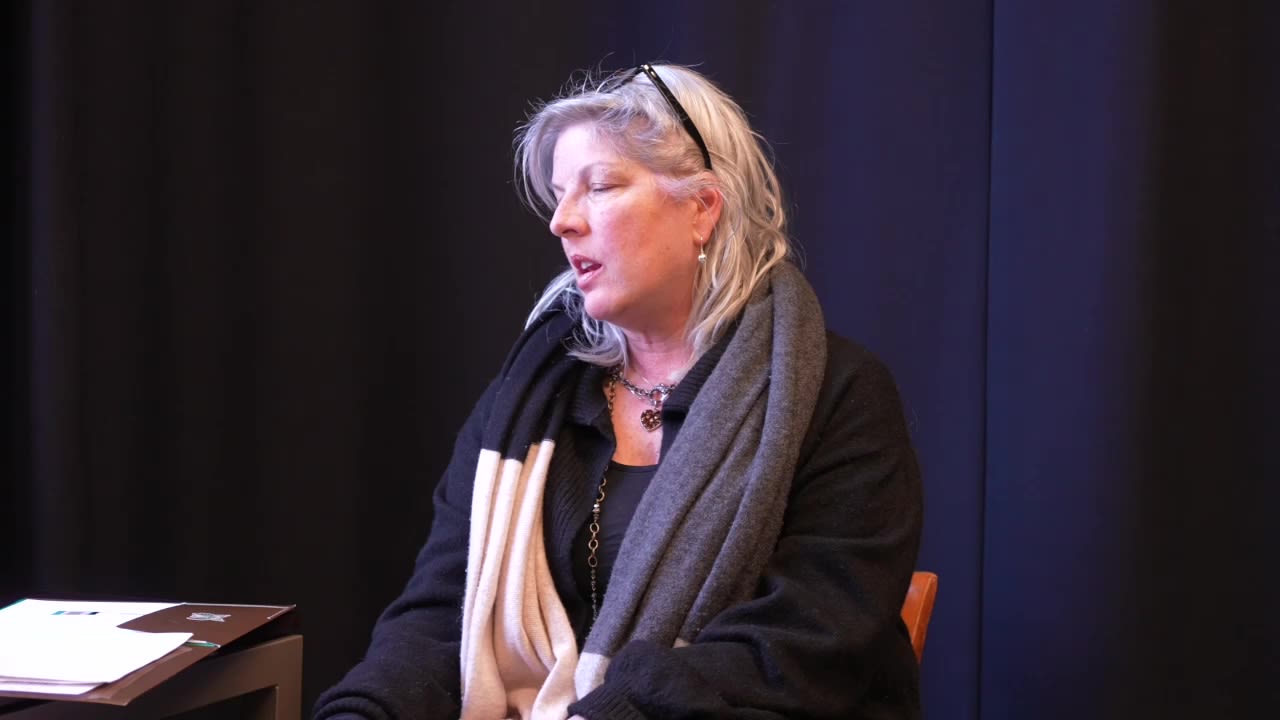
She emphasized the importance of finding an outlet for experiencing loss, whether it be the loss of a loved one, relationship or friendship.
By physically writing down her goals on paper, she described feeling committed to her words and following through on them. In her essay, she said she promised her mom and herself that she would never use her mother’s death as an excuse. Instead, she would remain motivated.
“There're some really important, powerful words that I almost can’t even believe I wrote at 22 years old,” Lalehzar said.
She said that the essay has become a staple in her life, something she has shared with others and referred back to for herself, too.

Professor Richard Eberst and Grief Education
Eberst’s interest in grief education goes back over 50 years to his days of doctoral work at the University of Maryland while he was also a part time health education teacher in Prince George County. Even though sex education was part of the curriculum, Eberst said that the principal gave him a list of certain “explicit” words he was not allowed to say in class.
“I went back to my advisor of my doctoral work, and I said, ‘Doc, how am I supposed to teach this class if the language of which is taboo?’” Eberst said.
They started talking about his research dissertation topic, and ultimately, the psychological aspect of this situation led Eberst to wonder what techniques could be developed to desensitize taboo words.
During preliminary research, Eberst decided to expand from solely sex-related health words to all health words. He found that words surrounding death and dying had a “higher intensity of meaning attached to them than sexuality words,” he said.
In a meeting with his dissertation committee, they realized that while they offered sexuality courses, there were none about death and grief. Thus, Eberst was tasked with writing a letter to every University in the country to see if they had a course on death and dying. He said he got around 60% return.
However, out of all the Universities who responded, Eberst said that he only found one course on death and dying at the University of Oregon – which they had only started the previous semester.
So, Eberst’s department assigned him with developing the course “Death, Dying and Suicidal Behavior.” At first, it was only for doctoral graduate students in the department.
Then, they opened it to all graduate students.
Then, they opened it up to everyone – and many students were interested.
“The largest lecture hall on campus held 500 people,” Eberst said. “We had 500 people who signed up for that course and 500 people on the waiting list.”
At every university he went to after University of Maryland, Eberst started a course in death and dying.
Eventually, Eberst and his grief education course came to Adelphi.
According to Eberst, the prompt for the essay assignment in the Death and Dying course at Adelphi was for the students to pick something that was important to them, and then to write a letter to someone that would express interest. Of course, because this assignment was personal, there was no sharing required.
Eberst stated that the problem with many of the courses he’s taught was that they didn’t get personal with the students.
Eberst’s way of connecting with his students and help them deal with death and dying was to do the assignment at least once a year as well.
He says that the learning objective of the course was to help the students develop an individual experience and to build a lifestyle that is self actualizing.
Eberst mentioned that death becomes an organizing factor and not to look at it in fear, but to really evaluate how you want to live your life. He also emphasized that the point of the course was the experience, and how students can take what they learned in the course and implement it into their own lives.
Eberst wants his students to feel motivated in their writing and steer away from an “I can’t” mindset. In doing this, his grading rubrics were mainly based on aspects like the social and spiritual implications of the assignment. As everything was personal, the grade wasn't the main focus.


 Built with Shorthand